
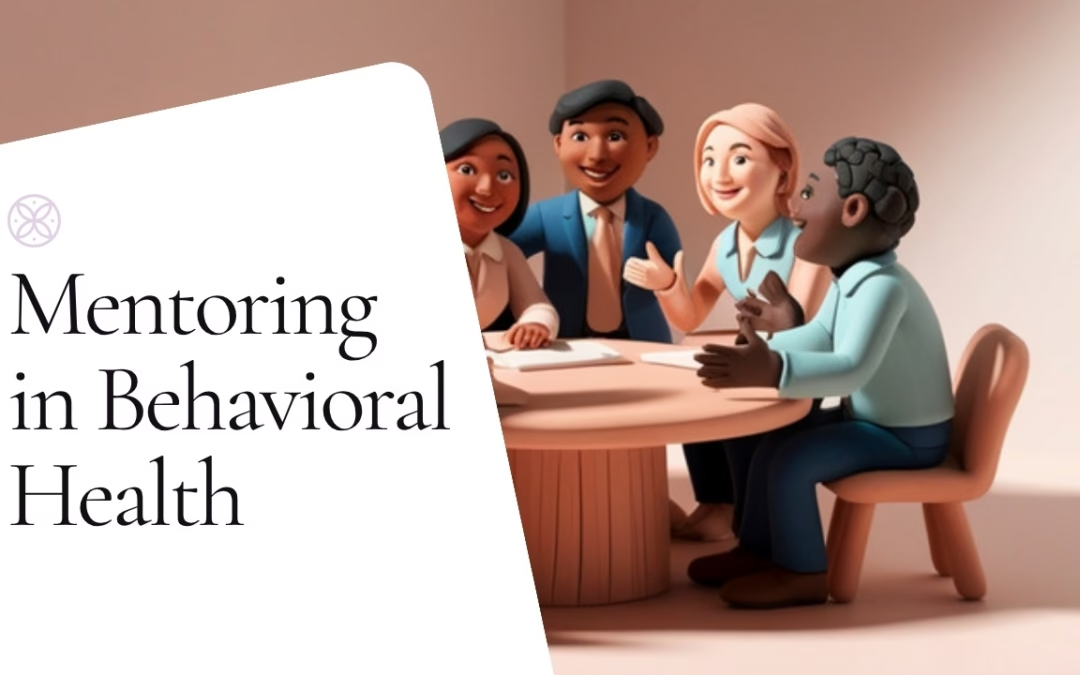
The single most cost-effective behavioral health talent strategy that most group practices are not using is building a formal internship and practicum program. Every social work, counseling, and psychology graduate program in the country requires students to complete supervised clinical field placements — practicum and internship experiences that typically involve hundreds of hours of supervised client contact over the final year or two of graduate training. These placements are mandatory, they are taken seriously by students, and they are the primary way that new clinicians form their professional identities and their first professional loyalties.
Organizations that become practicum and internship sites for local training programs are not just providing a community service — they are running the most efficient talent pipeline available to a behavioral health practice. Students who do excellent practicum work at an organization and find the culture, supervision, and clinical environment excellent are motivated candidates for associate-level employment upon graduation. Students who then complete their supervised hours toward licensure within the organization and are offered full-time employment upon licensure have extraordinary institutional loyalty and clinical culture fit that external hires almost never match.
How to build a practicum and internship program that works
Identify the right university partnerships. Not all training programs produce the graduates you want to hire. Programs whose clinical training emphasizes the populations you serve, the theoretical orientation you practice, and the level of care you provide are more likely to send students who are good fits for your organization. Investing relationship-building energy in two or three well-matched programs produces better pipeline candidates than scattering attention across many programs.
Designate qualified supervisors and build a supervision structure. Graduate programs require that practicum and internship students receive supervision from licensed staff who meet state-specific supervisor qualifications. Organizations that can offer named, qualified supervisors who are genuinely invested in student development — and who have the protected time to provide that supervision reliably — attract better students and build better reputations with training programs. Organizations that assign supervision to whoever has a free hour are known in their university communities as poor training sites and attract the students other sites didn’t want.
Treat practicum students as early-stage employees, not helpers. The organization that gives a practicum student an office, a caseload, clear clinical orientation, regular supervision, participation in team meetings, and genuine professional inclusion is building a future employee. The organization that uses practicum students as administrative support or assigns them clients with no supervision infrastructure is burning bridges before they’re built.
Build formal pathways from practicum to associate to licensed staff. The most effective organizations make the career pathway explicit: "Our practicum students who perform well receive priority consideration for associate-level employment upon graduation. Our associates who work toward licensure here receive quality supervision toward their LCSW/LPC hours and typically receive full-time employment offers upon licensure." This explicit commitment, communicated during the initial practicum orientation, creates a culture of mutual investment that dramatically improves retention.
Market the program actively. University field placement coordinators make decisions about where to place students based on which sites they know and trust. Organizations that attend university career fairs, maintain relationships with field placement coordinators, and communicate regularly about the quality and availability of their training placements consistently receive better and more motivated student placements than those that are invisible to the university community.
What a practicum program costs and what it returns
A well-run practicum program requires: designated supervisor time (typically 1–2 hours of direct supervision per student per week), basic administrative setup (field placement agreements, student orientation materials, documentation protocols), and a genuine culture of welcoming students as developing professionals. The cost in supervisor time is real, but it is far below the cost of recruiting and onboarding an external hire for the same role.
The return is a pre-screened, culturally vetted, supervision-hungry new associate who knows your organization’s values, your client population, your EHR system, and your colleagues — and who will complete their licensure hours within your organization if you treat the relationship well.
Axe Recruiting advises behavioral health organizations on talent pipeline strategy alongside our search services, and works with practices that want to build internship programs as a complement to direct recruitment.
Let’s Talk — We’re Ready to Help
Axe Recruiting is a specialized staffing and executive search firm serving clients across North America and EMEA. Whether you need to fill one critical role or build an entire team, our recruiters bring deep market knowledge, active candidate networks, and the speed your hiring timeline demands.
🕑 Monday – Friday, 9am – 5pm EST • Serving the US, Canada & EMEA • axerecruiting.com/contact-us