
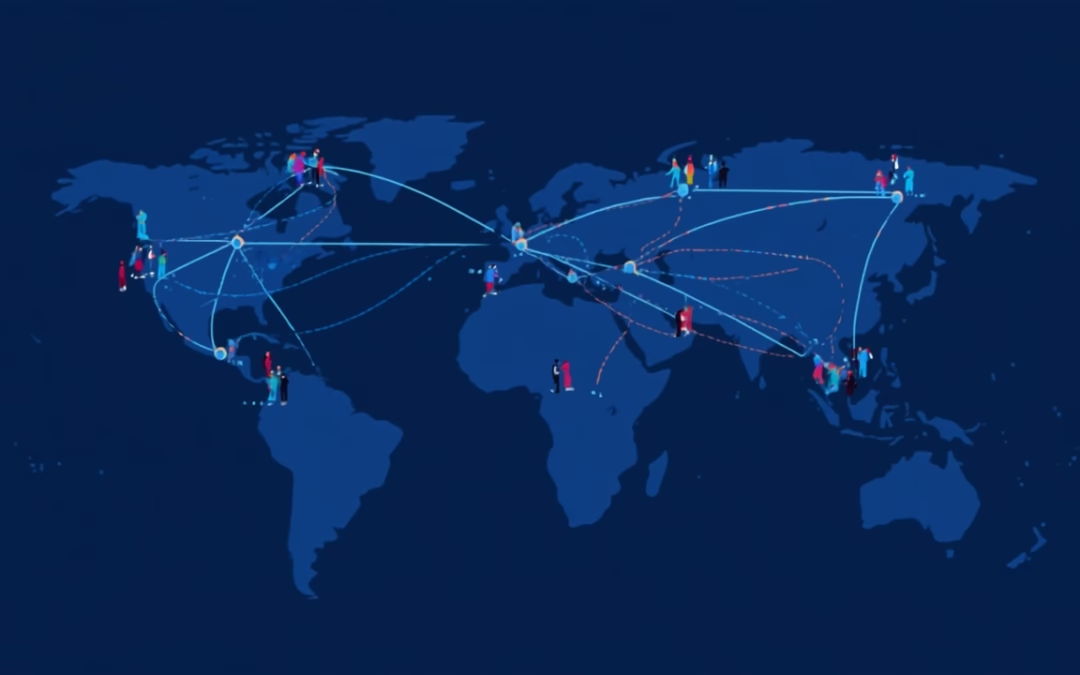
International sales hiring has become routine in 2026 in ways it wasn’t in 2020. Employer of Record platforms (Deel, Remote, Velocity Global, Rippling, Oyster) made cross-border hiring possible for companies without legal entities abroad. But routine doesn’t mean simple. Country-by-country compliance, comp norms, termination protections, and tax structures still matter. Companies that hire internationally without understanding the structural differences create liability and lose talent.
When to use Employer of Record
EOR works well when:
- You’re testing a new geography with 1-3 hires before committing
- You need to onboard a key candidate quickly while you decide on a longer-term structure
- You don’t have the internal capacity to manage international payroll, benefits, and compliance
- Your team size in country will stay small (under 10 people typically)
EOR cost typically runs $300-$700 per employee per month. For 1-5 employees in a country, this is cheaper than setting up an entity. Beyond 5-10 employees, the math shifts.
When to set up your own entity
Entity creation makes sense when:
- You’ll have 10+ employees in the country longer term
- You want direct employment relationships for cultural or legal reasons
- You need specific commercial activities (selling to local government, holding local licenses)
- The country’s EOR market is limited or expensive
Entity setup typically takes 3-6 months and runs $25-75K in initial costs plus ongoing accounting and compliance fees. Cost amortizes favorably past 10 employees.
Country considerations that matter
United Kingdom:
- Strong EOR ecosystem; widely used by US companies
- IR35 rules complicate contractor arrangements; full-time EOR employment cleaner
- Statutory benefits include pension, holiday, parental leave
- Termination requires notice; typical 1-3 months for sales roles
Canada:
- EOR widely available; provincial variation matters (Quebec vs Ontario rules differ)
- Termination requires notice OR pay in lieu; no at-will employment
- Statutory benefits include EI, CPP, provincial healthcare
- Healthcare benefits typically expected as supplemental
Germany:
- EOR available but more complex; strong worker protections
- Notice periods extend with tenure (up to 7 months for long-tenured employees)
- Works council requirements at certain headcount thresholds
- 13th month salary common; expect higher employer costs (30%+ above gross)
France:
- Strong employee protections; difficult to terminate
- EOR available but legal complexity high
- Statutory benefits significant (5 weeks vacation, healthcare, retirement)
- Sales comp plans must comply with collective bargaining agreements in some sectors
Australia and Singapore:
- EOR available; relatively straightforward
- Australia: superannuation requirement (employer contribution to retirement)
- Singapore: lower employer costs; common APAC hub
India and LatAm:
- EOR widely used given cost-of-living arbitrage opportunities
- India: complex tax structures; statutory benefits including provident fund
- LatAm: country-by-country variance significant; Mexico vs Brazil vs Colombia all differ materially
Common cross-border compliance traps
- Misclassification: Treating a full-time worker as a contractor produces tax and benefit penalties. Many countries have aggressive enforcement
- Permanent establishment risk: Hiring senior salespeople who close deals abroad can create tax nexus in their country, exposing the parent company to local corporate tax
- Termination law surprises: US-style at-will terminations are illegal in most countries; severance and notice requirements apply
- Comp plan compliance: Commission-only structures may violate minimum wage laws; variable comp must hit floors
- Data privacy: GDPR (EU), PIPEDA (Canada), and similar regulations affect HR data handling
- Equity issuance: US stock options have tax implications abroad that can produce unexpected employee tax bills
The sales-specific considerations
International sales hires bring additional complexity beyond generic hiring:
- Quota currency: USD-denominated quota fluctuates with FX; some countries prefer local currency quotas
- Commission timing: US-style monthly commission may need to be quarterly in countries with strict labor protections
- Buyer relationships: An AE who builds relationships with local enterprise buyers creates dependency; their departure produces meaningful revenue risk
- Territory definitions: Country boundaries don’t always match natural commercial territories
The mistake to avoid
Hiring internationally without engaging local legal counsel. EOR providers handle compliance basics but don’t replace local employment law expertise for senior or complex hires. Spending $5-10K on local counsel before your first hire in a new country saves $50-200K in eventual termination costs, misclassification penalties, or compliance retrofits.
Hiring help
Axe Recruiting hires sales talent across North America and EMEA.
Cross-border placement experience; partnerships with leading EOR providers for compliant hiring.
→ Sales Recruiting
→ Per-Seat Recruiting
→ Start a conversation
Call (888) 340-3048 · [email protected]