
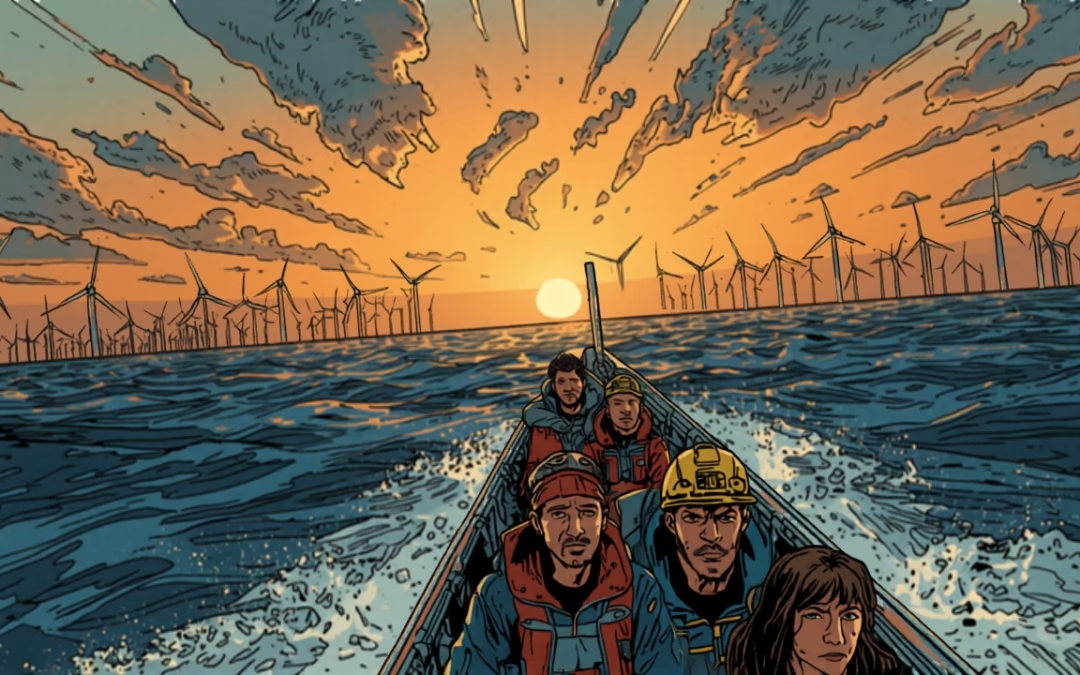
The US offshore wind industry is building toward scale, and the Southeast Atlantic coast is its next frontier. While the Northeast — Massachusetts, New York, New Jersey — has absorbed most of the offshore wind development and construction activity to date, the pipeline of projects planned for the waters off North Carolina, South Carolina, Virginia, and Georgia represents a significant and growing share of the national offshore wind buildout. Raleigh, as North Carolina’s capital and the administrative and engineering center of the state’s energy sector, has emerged as the onshore hub for a development pipeline that will ultimately put turbines in federal lease areas off the Outer Banks and the Cape Fear coast.
For companies operating in North Carolina’s offshore wind sector — developers, offshore engineering consultancies, port operators, supply chain companies, and the utilities that will ultimately offtake this power — the talent challenge is real and intensifying. Offshore wind engineering is a specialized discipline that has been developed primarily in Europe over the past three decades. The US is now attempting to transfer and build that expertise domestically at unprecedented speed, and the gap between where the domestic talent pool is and where offshore wind employers need it to be is one of the industry’s defining constraints.
The North Carolina offshore wind opportunity and its talent implications
North Carolina’s offshore lease areas are among the most valuable on the East Coast. The Bureau of Ocean Energy Management has auctioned lease areas off the North Carolina coast that sit in relatively shallow water, close to high-load coastal demand centers, and with favorable wind resource profiles. Projects like Avangrid’s Kitty Hawk Offshore Wind and the various lease area development activities underway represent a capital commitment of tens of billions of dollars that will need to be staffed.
Duke Energy’s offshore ambitions are reshaping the state’s talent market. Duke Energy, headquartered in Charlotte and the dominant utility in the Carolinas, has significant offshore wind ambitions and the regulatory and financial scale to execute them. Duke’s presence as both a potential developer and offtaker creates a gravitational pull on offshore wind engineering and development talent in North Carolina that makes Raleigh an increasingly important recruiting market even before major construction activity begins.
The port infrastructure buildout is creating supply chain and project management demand. North Carolina’s offshore wind buildout requires onshore port infrastructure for turbine component staging, assembly, and marshaling. The Port of Wilmington and potential new offshore wind port facilities in the state are creating demand for logistics, port operations, and supply chain management talent that is offshore wind-specific and scarce.
Federal permitting timelines create a sustained need for permitting expertise. Offshore wind projects in federal waters require environmental review under NEPA, consultation under the Endangered Species Act and Marine Mammal Protection Act, and coordination with the Coast Guard, FAA, Department of Defense, and fishing industry stakeholders. The permitting specialists who can navigate this process — and who have done it before in the US offshore context — are a small and intensely competed-for professional community.
Key roles in Raleigh’s offshore wind talent market
Offshore wind project developer / development manager — Development managers who can advance offshore wind projects through the BOEM leasing and permitting process, manage community and stakeholder engagement in coastal North Carolina communities, coordinate with state regulators (NCDEQ, North Carolina Utilities Commission), and develop the commercial structures needed to finance a multi-billion-dollar offshore project are the rarest and most valuable professionals in the North Carolina offshore market. Most of the qualified candidates in this category have offshore wind development experience in the Northeast or in Europe.
Offshore wind engineer (foundation, cable, balance of plant) — Offshore wind engineering encompasses several specialized disciplines: monopile and jacket foundation design, inter-array and export cable engineering, offshore substation design, and marine operations planning. These engineering specialties exist in substantial depth in Europe — the UK, Denmark, Germany, and the Netherlands have produced most of the world’s offshore wind engineers — and the US is actively recruiting from this international talent pool alongside domestic candidates.
Environmental permitting specialist (offshore, BOEM) — BOEM’s Construction and Operations Plan review process, the associated environmental impact statement, and the stakeholder consultation requirements for offshore wind are specialized enough that the universe of professionals who have navigated them in the US is genuinely small. Companies that have this expertise in-house — or that partner with consultancies that have it — have a material advantage in moving their development timelines forward.
Marine operations and offshore logistics manager — The construction and installation phase of an offshore wind project requires specialized marine logistics expertise: vessel procurement and management, port coordination, heavy lift planning, and the health and safety management framework for offshore construction operations. This profile is almost entirely populated by professionals with backgrounds in oil and gas offshore operations or European offshore wind construction, and recruiting them to North Carolina requires a compelling relocation story alongside competitive compensation.
Offshore wind O&M technician and engineer — As the first US offshore wind projects have moved into operations, demand for O&M technicians trained in offshore access, turbine maintenance, and subsea cable inspection has grown. The GWO (Global Wind Organisation) training certifications required for offshore access, combined with the technical demands of working on turbines in a marine environment, make this workforce segment genuinely specialized.
Compensation benchmarks for Raleigh offshore wind roles, 2026
The offshore wind market commands compensation premiums relative to onshore renewable energy roles, reflecting both the specialization required and the active competition from European companies recruiting US-based talent.
- Offshore development manager (5–10 years): $130,000–$185,000
- Offshore wind engineer (foundations / cables, 5–10 years): $125,000–$170,000
- Environmental permitting specialist (BOEM, 5–10 years): $110,000–$155,000
- Marine operations manager: $130,000–$175,000
- Offshore O&M engineer (3–7 years): $100,000–$140,000
- Director of offshore development (NC / Southeast): $185,000–$265,000+
Building a recruiting strategy for offshore wind in North Carolina
Offshore wind talent does not respond to standard job board recruiting. The community is small, globally distributed, and largely connected through industry-specific channels — the American Clean Power Association’s offshore division, the Offshore Wind Industry Council, the European wind industry events that many US developers attend, and the university programs (University of Maine, Virginia Tech, UNC-Wilmington) that are beginning to produce domestically trained offshore wind engineers.
Axe Recruiting works with offshore wind developers, engineering consultancies, and supply chain companies across the Southeast on both domestic and international talent sourcing for offshore wind roles. We bring knowledge of the offshore wind talent community, active networks in both the US and European markets, and the ability to reach candidates with the specific technical credentials that North Carolina’s offshore buildout requires.
Contact Axe Recruiting to discuss your Raleigh and Southeast offshore wind recruiting needs.