
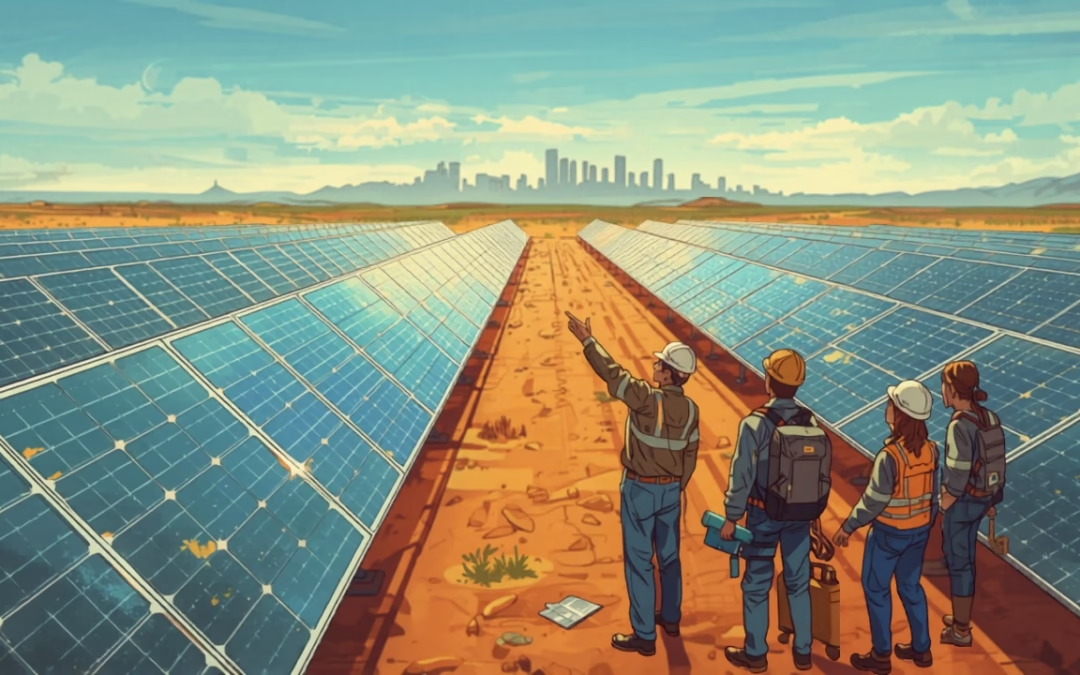
Arizona generates more utility-scale solar power per capita than almost any state in the country, and Maricopa County sits at the geographic center of the most active solar development corridor in the United States. The combination of 300-plus days of sunshine per year, vast tracts of available land, favorable interconnection access through the Western Interconnection, and state and federal policy tailwinds created by the Inflation Reduction Act has made the Phoenix metro — and the broader Sun Belt region it anchors — the epicenter of solar energy development activity in 2026.
What that activity has produced, in workforce terms, is a talent crisis. The pipeline of projects currently in development, construction, and early operations across Arizona, Nevada, and New Mexico demands engineering, project management, EPC, and operations talent at a scale that no single university system, workforce development program, or organic labor market can supply on its own. Companies that win the talent competition in Phoenix solar will execute projects on schedule and on budget. Companies that lose it will face delays, cost overruns, and the compounding risk of a crowded interconnection queue that punishes anyone who slips their construction timeline.
This guide is for solar developers, EPC firms, IPPs, utilities, and clean energy infrastructure companies operating in or expanding into the Phoenix market who want to understand the 2026 recruiting landscape and compete for technical talent more effectively.
Why Phoenix is the center of US solar development in 2026
The numbers are not subtle. Arizona had more than 8 gigawatts of utility-scale solar capacity in operation at the end of 2025, with another 15-plus gigawatts in various stages of development and interconnection across the state. The Sonoran Desert’s irradiance levels — consistently among the highest in the continental US — make Arizona solar one of the highest-yield generation assets available to developers and offtakers anywhere in the country.
Several specific factors make Phoenix the operational hub of this activity:
APS and SRP are major offtakers with aggressive clean energy targets. Arizona Public Service and Salt River Project both have substantial renewable energy commitments driving procurement activity. The presence of large, creditworthy utility offtakers with long-term PPA structures gives developers the contractual foundation to finance and build projects — and to hire the teams that build them.
The IRA’s domestic content and energy community bonuses are creating a manufacturing adjacent ecosystem. The Inflation Reduction Act’s incentive structure — including the domestic content adder for projects using US-manufactured components and the energy community bonus for projects in fossil fuel transition zones — has attracted solar module and component manufacturing investment to the Southwest. This manufacturing presence creates adjacent hiring demand for quality engineers, supply chain managers, and commissioning specialists who sit at the intersection of manufacturing and project development.
Data center and tech company demand is driving commercial and industrial solar. The Phoenix metro has become one of the largest data center markets in the US, driven by available land, affordable power, and favorable climate for cooling. Microsoft, Google, Meta, and dozens of hyperscale and colocation operators have significant Arizona footprints and increasingly require on-site or behind-the-meter renewable generation as part of their sustainability commitments. This C&I solar demand creates a parallel hiring market to utility-scale development — different roles, different compensation structures, and different candidate profiles.
The roles solar companies in Phoenix are trying to fill
Not all solar roles are created equal in terms of recruiting difficulty. Understanding where the friction is concentrated helps companies allocate their recruiting investment appropriately.
Solar project manager / senior project manager — The most consistently in-demand role across all solar company types in Phoenix. An experienced solar PM who has taken a utility-scale project from NTP through COD — managing EPC contracts, navigating interconnection milestones, coordinating permitting across multiple jurisdictions, and maintaining investor and offtaker relationships — is worth their weight in any developer’s org. These candidates typically have 5–12 years of experience, often with a civil, electrical, or mechanical engineering background, and are being recruited simultaneously by developers, EPCs, and increasingly by utilities building their own project management capabilities in-house.
Electrical engineer (solar / storage integration) — The electrification of the grid and the rapid growth of co-located solar-plus-storage projects have created intense demand for electrical engineers with specific expertise in power electronics, inverter systems, transformer design, and SCADA integration. The candidate pool with this exact background and solar-specific experience is narrow nationally and even narrower in Phoenix specifically, despite the city’s status as a solar hub. Engineers with BSEE backgrounds and 3–8 years of utility-scale solar or storage experience are in active competition from developers, EPCs, O&M firms, and equipment manufacturers simultaneously.
Civil / structural engineer (solar)— Ground-mount utility-scale solar requires substantial civil and structural engineering scope: grading, drainage, foundation design (driven pile, ballast, and ground-screw systems), access roads, and structural analysis for tracker and fixed-tilt racking systems. Civil engineers with solar-specific experience — particularly those with exposure to Arizona’s expansive soils, caliche formation challenges, and desert hydrology — are consistently hard to find.
Interconnection and transmission specialist — As the interconnection queue in the Western Interconnection has grown to historically congested levels, the ability to navigate CAISO, WPS, and transmission provider study processes has become a core organizational capability for any serious solar developer. Candidates with genuine interconnection study expertise — who understand the technical requirements of feasibility, system impact, and facilities studies and can manage the developer’s position through a multi-year queue process — are exceptionally rare and command premium compensation.
Land acquisition manager / senior developer — The development pipeline for utility-scale solar starts with site control, and the ability to identify developable land, negotiate option and lease agreements with landowners, navigate local land use and zoning requirements, and assess a site’s technical and financial viability before committing capital is a specialized skill set. Experienced land acquisition professionals in Arizona — particularly those with relationships in Maricopa, Yuma, La Paz, and Mohave counties — are actively recruited by every developer with an active pipeline.
O&M technician / lead O&M technician — As Arizona’s operational solar fleet has grown, the demand for qualified operations and maintenance technicians — skilled in inverter troubleshooting, tracker maintenance, thermographic inspection, and SCADA monitoring — has grown proportionally. The O&M workforce is often sourced from adjacent trades (electricians, HVAC technicians) but solar-specific experience and NABCEP certification meaningfully increases candidate productivity and reduces training ramp time.
EPC construction manager / superintendent — For EPC firms and developers self-performing construction management in Arizona, the ability to recruit experienced field leaders who can manage subcontractors, maintain safety programs, enforce quality standards, and hit commissioning milestones on large sites — sometimes 50 to 500 megawatts under construction simultaneously — is a direct constraint on project execution capacity.
Compensation benchmarks for solar roles in Phoenix, 2026
Solar compensation in Arizona is competitive with national markets and has increased meaningfully since the IRA’s passage created a step-change in development activity. These figures reflect total cash compensation for direct employment roles.
- Solar project manager (5–8 years): $110,000–$145,000
- Senior project manager / director of project management: $145,000–$195,000
- Electrical engineer (solar, 3–7 years): $100,000–$135,000
- Civil / structural engineer (solar, 3–7 years): $90,000–$125,000
- Interconnection specialist (3–8 years): $115,000–$160,000
- Land acquisition manager (5–10 years): $105,000–$145,000 plus deal bonus structures
- O&M lead technician (NABCEP, 3+ years): $68,000–$90,000
- EPC construction manager (utility-scale): $130,000–$175,000
- VP of development / director of development: $175,000–$250,000+
Companies that benchmark against 2022 or early 2023 compensation data — before the IRA’s full effect on hiring demand worked through the market — will find their offers landing below competitive. The most common recruiting failure mode in Phoenix solar today is not a bad sourcing strategy but a compensation structure that was set before demand surged and has not been updated.
Why solar recruiting in Phoenix requires a specialized approach
The solar talent market in Phoenix is small, interconnected, and moves fast. Engineers and project managers who are open to a move typically receive multiple outreach messages per week from recruiters and hiring managers. The candidates who accept an offer rarely do so because they responded to a job posting — they do so because someone they trusted made a compelling, specific, and well-timed case for an opportunity that fit their career trajectory.
This means that effective solar recruiting in Phoenix requires:
A network within the Arizona clean energy community. The Arizona Solar Energy Industries Association (AriSEIA), the Western Solar industry events, and the interconnected professional community of solar developers, EPCs, and utilities in the Phoenix metro are all sources of candidate intelligence and relationship development that no job board can replicate. Recruiters who are known and trusted in this community — who can represent an opportunity credibly to a passive candidate — operate in a fundamentally different way than those who spray job postings and wait.
Speed and decision authority. The best solar candidates in Phoenix are not waiting for a slow hiring process. If a developer identifies a strong interconnection specialist or senior PM and takes three weeks to schedule a second interview, that candidate has accepted an offer elsewhere. Companies that have pre-authorized compensation ranges, designated decision-makers for final offers, and streamlined interview processes close more searches — and close better candidates — than organizations that move at institutional speed.
A value proposition that goes beyond compensation. Experienced solar professionals in Phoenix evaluate opportunities on the quality and scale of the project pipeline, the financial backing of the organization, the career development trajectory, and the culture of the technical team they would join. Companies that can speak specifically and credibly to these factors — rather than offering generic "exciting opportunity" framing — attract better candidates and retain them longer.
Axe Recruiting works with solar developers, EPC firms, IPPs, and clean energy infrastructure companies across the Phoenix metro and the broader Southwest on technical, project management, development, and executive search engagements. We bring active networks within the Arizona solar community, current compensation intelligence, and a sourcing approach that reaches candidates who are not applying to job postings.
Contact Axe Recruiting to discuss your Phoenix solar recruiting needs.