
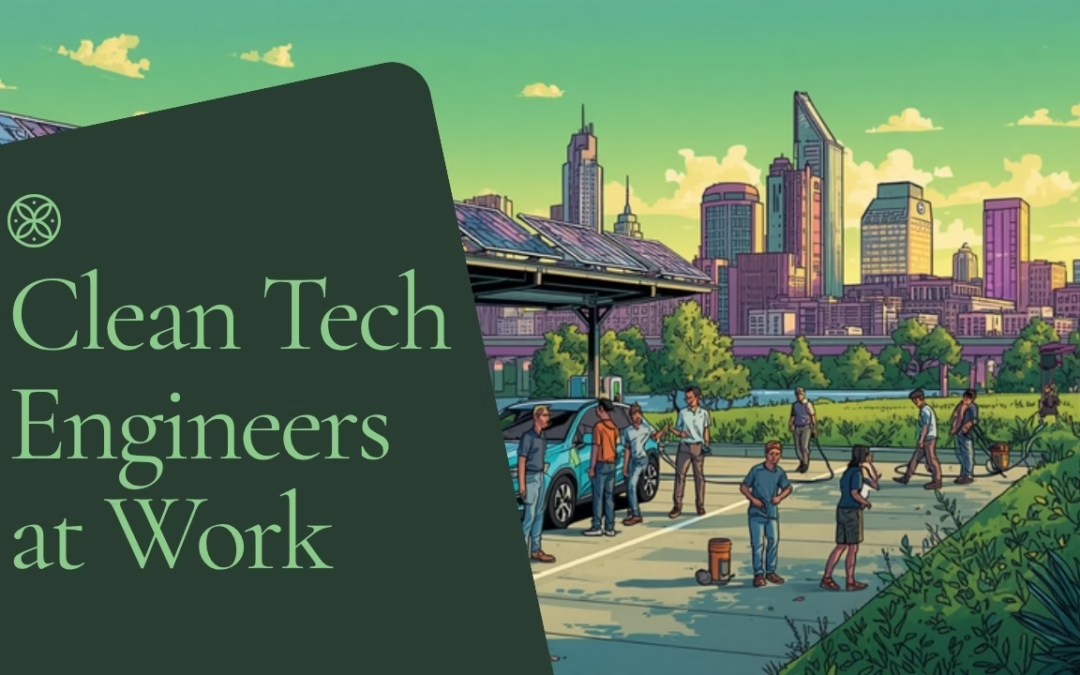
Austin’s identity as a clean technology hub has been building for a decade, but the years since 2021 have been transformational. The combination of Tesla’s Gigafactory and headquarters presence, the broader EV supply chain investment that has followed, a state government increasingly engaged with grid reliability and energy transition policy, and the University of Texas’s growing clean energy research enterprise has made Austin one of the most important clean technology labor markets in the United States. The city is no longer just a place where clean energy projects get managed — it is where clean energy companies are headquartered, where EV infrastructure is being designed and deployed, and where the engineers, policy professionals, and program managers driving the US energy transition are building their careers.
For companies hiring clean tech talent in Austin in 2026 — whether you are an EV charging infrastructure operator, a vehicle electrification company, a grid modernization software firm, a clean energy policy consultancy, or a corporate sustainability team — the labor market is competitive in ways that are distinct from the broader Austin engineering market. This guide addresses those specific dynamics.
Austin’s clean tech ecosystem in 2026
Tesla’s presence has created a talent multiplier effect. Tesla’s Gigafactory Texas — producing Model Y vehicles and 4680 battery cells — employs thousands of engineers, manufacturing specialists, and operations professionals in the Austin metro. The alumni network of Tesla employees who have left to join or found clean tech startups, join competitors, or move into adjacent clean energy roles represents one of the richest seams of practical EV and battery manufacturing experience in the country. Companies that know how to recruit from this talent pool — and how to make a compelling case for why their opportunity is better than staying at Tesla — have a structural advantage.
EV charging infrastructure is becoming its own industry sector. The deployment of Level 2 and DC fast charging infrastructure across Texas — driven by the NEVI formula program funding, utility electrification programs, and private network operator investment — has created a demand for a new kind of engineer: the EV charging infrastructure specialist who understands electrical distribution engineering, utility interconnection, power electronics, software integration, and site development. This profile did not exist as a distinct career track five years ago and is now in high demand from charging networks (Blink, EVgo, ChargePoint, Tesla Supercharger), utilities, and municipalities simultaneously.
Corporate sustainability and ESG teams are creating new professional categories. The largest employers in Austin — both technology companies and traditional industries — have built out corporate sustainability functions that require professionals who can manage carbon accounting, renewable energy procurement, Scope 3 emissions assessment, and sustainability reporting under SEC and CSRD frameworks. This white-collar clean tech demand has grown alongside the engineering demand and draws from a different talent pool — often business school graduates with specialized sustainability credentials or engineers who have transitioned from technical to commercial roles.
Grid edge technology is a major and growing segment. Austin’s concentration of software engineering talent, combined with its clean energy orientation, has made it a center for grid-edge technology companies: virtual power plant platforms, demand response software, distributed energy resource management systems (DERMS), and building energy management technology. These companies need software engineers with energy domain knowledge, product managers who understand utility business models, and sales engineers who can interface with utility and commercial customer technical teams.
Clean tech and EV roles that are hardest to fill in Austin
EV charging infrastructure engineer — The electrical engineering required to design and deploy DC fast charging infrastructure — distribution system upgrades, make-ready design, transformer sizing, protection coordination, and utility interconnection design — is a specific application of electrical distribution engineering that most utility and consulting engineers have not focused on. The combination of this technical knowledge with practical experience deploying EVSE equipment, managing utility coordination across ONCOR’s service territory, and integrating charging infrastructure with building electrical systems is genuinely rare in Austin.
Battery systems engineer (EV / stationary) — Engineers with hands-on experience in battery cell characterization, pack design, BMS development, thermal management, and safety testing occupy a sought-after position at the intersection of automotive and energy storage engineering. Austin’s position in the EV supply chain — through Tesla and the growing supplier ecosystem — makes this profile locally available in greater depth than most US markets, but demand still outpaces supply.
Clean energy software engineer (energy domain) — Software engineers with energy domain knowledge — who understand how electricity markets work, what a distribution utility’s operational constraints are, how demand response programs are structured, and how to build software products that integrate with utility systems — are valued at a significant premium over generalist software engineers. Austin’s software engineering market is already competitive; the energy domain knowledge layer narrows the qualified pool further.
ERCOT / energy policy analyst — The intersection of technical grid knowledge and policy analytical capability is a rare combination. Professionals who can analyze ERCOT market design questions, model the grid and market impacts of policy interventions, and translate technical analysis into regulatory filings or policy recommendations are in demand from utilities, independent power producers, grid technology companies, and clean energy advocacy organizations simultaneously.
EV program manager (fleet electrification) — Fleet electrification — converting municipal, commercial, and utility vehicle fleets from combustion to electric — is a growing market that requires program managers who can navigate vehicle procurement, charging infrastructure siting and installation, utility rate structure analysis, driver training, and the financial modeling needed to justify fleet electrification investments. This profile is specific to the fleet electrification context and does not map cleanly to general project management backgrounds.
Compensation benchmarks for Austin clean tech roles, 2026
- EV charging infrastructure engineer (3–7 years): $95,000–$130,000
- Battery systems engineer (EV / stationary, 3–7 years): $115,000–$155,000
- Clean energy software engineer (energy domain, 3–7 years): $130,000–$175,000
- ERCOT / energy policy analyst (5–10 years): $110,000–$150,000
- EV fleet program manager (3–7 years): $90,000–$125,000
- Corporate sustainability manager (ESG, 3–7 years): $90,000–$125,000
- VP of clean tech / clean energy (Austin-based company): $175,000–$260,000+
Recruiting clean tech talent in Austin
Austin’s clean tech talent market moves at startup speed — which is where much of the most interesting clean tech work is happening. The best candidates in this market are often evaluating multiple opportunities simultaneously, making decisions quickly, and prioritizing mission alignment alongside compensation. Companies that have a clear, compelling articulation of their role in the energy transition — and that can describe specifically how the person they are hiring will contribute to it — attract better candidates and build stronger teams.
Axe Recruiting works with clean technology companies, EV infrastructure operators, grid software firms, and corporate sustainability teams across Austin on technical, engineering, product, and leadership search engagements. We understand the Austin clean tech ecosystem, maintain active relationships with the engineering and policy communities that drive it, and bring recruiting precision to a talent market that rewards speed and specificity.
Contact Axe Recruiting to discuss your Austin clean tech recruiting needs.