The child and adolescent behavioral health workforce shortage is one of the most urgent and most consequential in American healthcare. The mental health crisis among children and teenagers — accelerated by the pandemic, social media, academic pressure, family instability, and the compounding effects of adverse childhood experiences — has driven demand for child and adolescent mental health services to unprecedented levels. Emergency departments are overwhelmed with pediatric psychiatric presentations. School-based mental health programs are chronically understaffed. Outpatient child therapy waitlists stretch for months. And the clinicians trained to work with children and adolescents are simply not available in the numbers needed.
What makes child and adolescent behavioral health distinct as a workforce
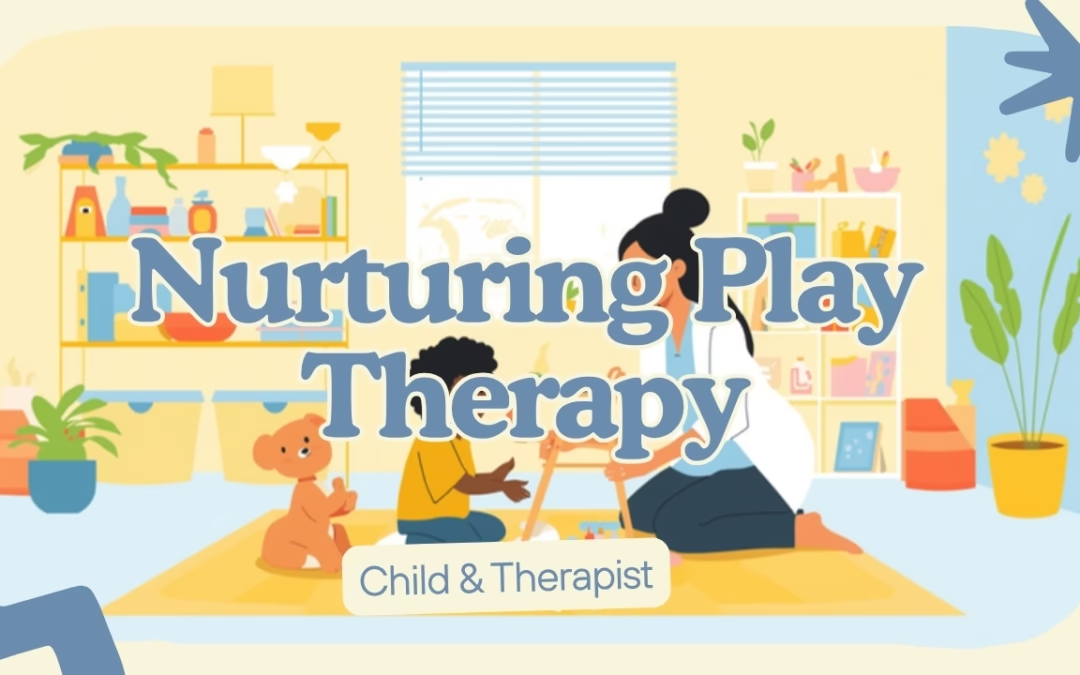
Specialized training is required — and rare. Working effectively with children and adolescents requires training that most general clinical education does not provide at sufficient depth. Play therapy, developmental psychology, family systems theory applied to child and adolescent presentations, pediatric assessment, developmental trauma, the specific presentations of ADHD and learning disorders, and the family dynamics of adolescent mental health all require training beyond general clinical education. The clinician who has completed a play therapy certificate, a child and adolescent mental health specialization, or a Trauma-Focused CBT certification for youth is a specifically trained practitioner, not simply a clinician assigned to a younger age group.
Family system involvement is typically required. Child and adolescent therapy almost always involves significant parent and family engagement — collateral sessions with parents, family therapy components, coordination with schools, and the complex navigation of minor confidentiality within family systems. Clinicians who are not comfortable working with parents and family systems, or who prefer the relative simplicity of individual adult therapy, often struggle with child and adolescent caseloads and their associated dynamics.
Child/adolescent psychiatry is the most acute shortage in all of behavioral health. There are estimated to be fewer than 10,000 board-certified child and adolescent psychiatrists practicing in the United States — a figure that represents a fraction of what would be needed to address the scale of pediatric psychiatric need. Child psychiatrist searches routinely take 12–18 months with full national scope.
School-based sourcing is a key pipeline. Clinicians who did school-based practicum or internship placements are often specifically interested in child and adolescent work and have been shaped by the developmental and systems perspective that school-based training provides. Organizations that build relationships with training programs emphasizing child and adolescent or school-based placements recruit from a more specifically prepared pipeline.
Child and adolescent behavioral health compensation benchmarks, 2026
- LCSW / LPC (child and adolescent specialty, 2–6 years): $68,000–$92,000
- Play therapy certified therapist (RPT): $72,000–$98,000
- TF-CBT certified clinician (child and adolescent): $70,000–$95,000
- PMHNP (child and adolescent specialty): $138,000–$175,000
- Child and adolescent psychiatrist: $320,000–$480,000+
- Clinical director (pediatric behavioral health): $108,000–$148,000
Axe Recruiting works with child and adolescent behavioral health practices, pediatric hospitals, school-based health programs, and youth-serving mental health organizations on clinician, prescriber, and clinical leadership search.
Let’s Talk — We’re Ready to Help
Axe Recruiting is a specialized staffing and executive search firm serving clients across North America and EMEA. Whether you need to fill one critical role or build an entire team, our recruiters bring deep market knowledge, active candidate networks, and the speed your hiring timeline demands.
🕑 Monday – Friday, 9am – 5pm EST • Serving the US, Canada & EMEA • axerecruiting.com/contact-us