
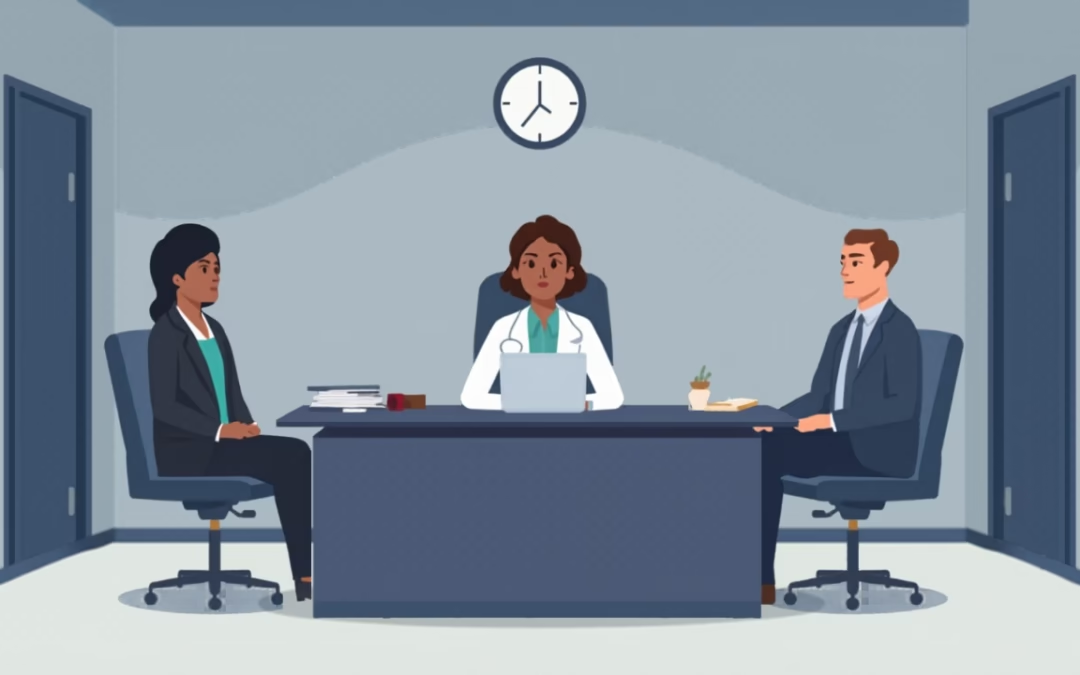
Forensic mental health is one of the most specialized and most chronically understaffed niches in behavioral health. The intersection of mental health clinical practice with the legal system — evaluating competency and criminal responsibility, treating individuals in correctional settings, providing expert testimony, staffing forensic psychiatric units, and providing community-based services to people returning from incarceration — requires a combination of clinical training, legal literacy, and organizational tolerance for working within institutional systems that most clinicians do not have.
What forensic mental health clinicians do
The forensic behavioral health clinician works in a range of settings depending on their specific role: court-ordered evaluations (competency to stand trial, criminal responsibility assessments, risk assessments), correctional mental health (jail and prison mental health services), state psychiatric hospitals (often serving forensic-committed patients), community mental health programs serving justice-involved populations (including reentry programs, specialty courts, and diversion programs), and juvenile justice behavioral health programs.
Each of these settings has different employment conditions, different legal and ethical frameworks, and different skill requirements. What they share is the need for clinicians who can operate effectively within institutional hierarchies that are not primarily organized around clinical care, who can maintain therapeutic relationships with clients who are often involuntary or ambivalent about treatment, and who can navigate the specific boundary challenges of clinical work in systems with competing (and sometimes conflicting) institutional goals.
What makes forensic mental health recruitment different
The clinician pool is specifically trained and not large. Most clinical training programs provide minimal forensic training, meaning that forensic mental health clinicians have almost always sought out additional training beyond their basic clinical education — through forensic fellowships, continuing education in forensic assessment, or experience accumulated within forensic settings. This is a small professional community with a specific identity, and recruiting within it requires visibility in that community.
The work environment is not for everyone. Correctional mental health work, forensic psychiatric hospital work, and justice-involved community mental health all require comfort with institutional environments, with clients who are sometimes involuntary and sometimes dangerous, and with the ethical complexity of providing care within systems that are simultaneously clinical and custodial. Clinicians who have not worked in these environments often have unrealistic expectations about the work — and those who are drawn to it are typically drawn to it for specific reasons that a well-designed interview can surface.
Government and public sector employment is the primary context. Most forensic mental health positions are in public sector settings — county jails, state correctional systems, state psychiatric hospitals, court-based programs. These positions offer stable employment and often public employee benefits but typically at compensation levels below private sector behavioral health. The clinicians who choose forensic work do so for mission and interest, not compensation maximization.
Forensic mental health compensation benchmarks, 2026
- LCSW / LPC (jail / prison mental health): $62,000–$85,000
- Forensic evaluator (LCSW / LPC, court-based): $68,000–$95,000
- Forensic psychologist (PhD / PsyD): $95,000–$138,000
- Forensic psychiatrist: $270,000–$420,000+
- Director of forensic mental health services: $105,000–$148,000
Axe Recruiting works with correctional mental health programs, forensic psychiatric hospitals, court diversion programs, and reentry behavioral health organizations on clinician and clinical leadership search.
Let’s Talk — We’re Ready to Help
Axe Recruiting is a specialized staffing and executive search firm serving clients across North America and EMEA. Whether you need to fill one critical role or build an entire team, our recruiters bring deep market knowledge, active candidate networks, and the speed your hiring timeline demands.
🕑 Monday – Friday, 9am – 5pm EST • Serving the US, Canada & EMEA • axerecruiting.com/contact-us